16+ Draw The Major Product Of The Reaction Sequence Omit Byproducts Ideas
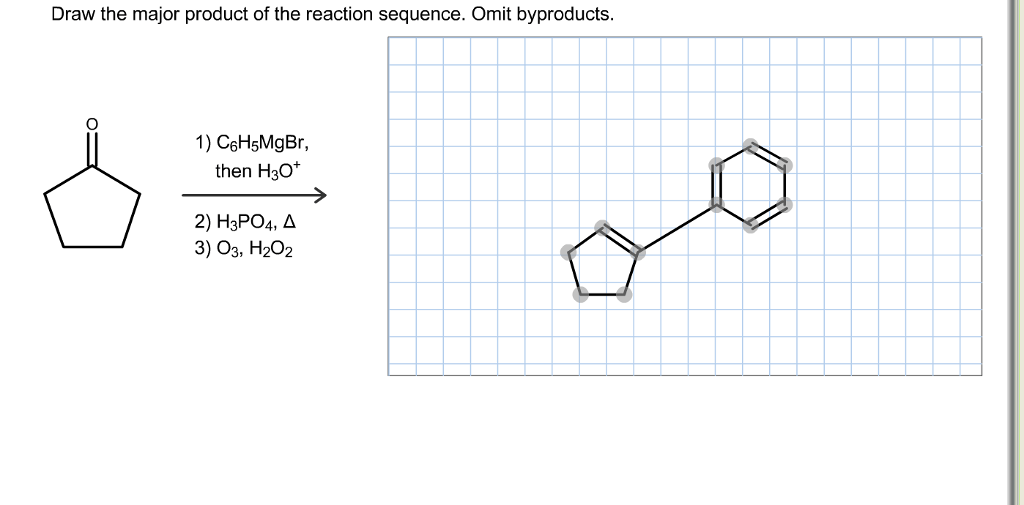
Draw The Major Product Of The Reaction Sequence Omit Byproducts. Select draw rings more erase с h 0. Be sure to clearly show stereochemistry (if applicable).the starting material is an alkyne where carbon 1 is bonded to.
Drawing is an art that lets an artist demonstrate their imagination and creative abilities using a pen, pencil or other drawing medium. While there are many approaches and methods used to draw but these techniques are based on some fundamental concepts. These basic concepts include value, media, reference and the usage of drawing tools that are basic. These concepts are essential for you to understand if beginning to learn about drawing, but they are also beneficial for the more experienced artist.
Basic definitionsDrawing is a method of expression whereby marks that are placed on a surface form an image. It is the primary skill associated with all artistic visual. Various tools are used in drawing, such as brushes, pencils, crayons, and even chisels.
The work of many artists is renowned as being able to create drawings that convey literary text Bible texts, biblical passages, and many other forms of artwork. Drawing is among the most personal artistic statements.
The basic categories of drawing are : preparatory and finished and casual. Drawing preparatory refers to the making of a set of drawings including a sketch for an artwork. Finalizing the work signifies the completeness of the composition. The casual drawing is a drawing with no ongoing purpose.
MediaDrawing is a multifaceted artistic medium that allows a creative person to convey his or her ideas. In addition to being an art that can be utilized in a variety of ways, it is also useful in generating new ideas. This is especially true if the artist has a solid studio practice.
Drawing is a hobby that demands making use of a large variety of materials and tools. This includes pencils, crayons, and charcoal. Furthermore, many dry media can be mixed or wetened for different effects.
While the art of drawing is not without its flaws, it still serves as an opportunity to communicate. It is not just a practical skill as well, but it's an essential component in the creation of knowledge.
TechniquesIf you want to produce the most realistic art, make sure you apply techniques for drawing. Shading and hatching are two significant techniques that transform any sketch into a high-quality work of art.
When it comes to shading cross hatching is a technique that is widely used by artists. Cross hatching is a way to create zones of light and shade by drawing two lines of criss-crossing.
Stippling is an additional shading technique which you can apply. Making small dots with pencil to create light a drawing. Stippling is also an effective way to add dimension and texture to your work.
ValueValue is the term used to define light and dark in art. It is a key element when drawing, and is usually the first step in learning how to achieve realistic shading.
There are many methods to gain knowledge about value from drawing. One of the first steps is to master how to create a value-scale. In this kind of drawing it is created by connecting five squares. The most important thing to remember is that the five squares must approximate equal in dimensions and shape.
Another aspect that is crucial to understanding about value is the best way to incorporate it into your sketches. For this, you'll require sketches in your sketchbook. You'll also be in need of a pencil, as well as an eraser.
Preparatory drawing vs finished drawingPreparatory drawing is an art form that provides artists with an insight into the process of creating. It is the basis of every visual art. The name suggests that it's carried out prior to the actual creation of a sculpture or painting. In the process the artist explores ideas on paper, trying to discover what is the most appropriate approach to the final artwork.
The tools that are utilized for preparatory drawing can include graphite or a brush as well as ink and pastels. The tools can be altered for different surfaces. For instance, a brush is perfect for applying paint to a flat surface.
ReferencesMaking use of references in drawing is an excellent way to boost your abilities. You can utilize photos models, models, or other artworks to draw. It will also provide you with the opportunity to test your skills.
Some think that using references in drawing is a ploy to cheat. Others believe it's a valuable tool for artists. They can utilize it to enhance their drawing skills as well as create new content. However, it's crucial that they know how to use the reference images correctly.
The principal thing to keep in mind is to not take the image in exact detail. It is better to look at the larger picture and gain a greater understanding of the finer details.
However, i found it on another place, and picture 1 shows the innitial product and conditions. Solution for draw the major product of the reaction sequence. Solution for draw the structure of each molecule.
Draw Organic Reaction Main Indicate Stereochemistry Including Stereocenter Omit Byproducts Each Such Salts Methanol Chegg Transcribed Text Solved.
Draw the structures of organic compounds a and b. Select draw rings more erase с h 0. You'll get a detailed solution from a subject matter expert that helps you learn core concepts.
Give Only One Answer In Each Box.
One or more substances that react together to form a product is called a chemical reaction. The alba hides and reacts with itself on their basic conditions. Draw the major organic product of the following reaction.
Draw The Major Organic Product In The Reaction Scheme.
Solution for draw the major product of the reaction sequence. Ch3(ch2)2ci 2 draw the major product of the reaction sequence. The question is missing the innitial structure.
1) C,H, Mgbr, Then H,O* 2) H, So,, A 3) O, 4) Ch,Sch,
1) add curved arrows for the first step. For reactions that you expect to yield multiple products, draw. Identify the reagents for all three steps.
Picture 2 Shows The Mechanism And.
Be sure to clearly show stereochemistry (if applicable).the starting material is an alkyne where carbon 1 is bonded to. (12 pts) for each of the reactions below, fill in the empty box corresponding to product. Most chemical reactions take place with the help of reagents.